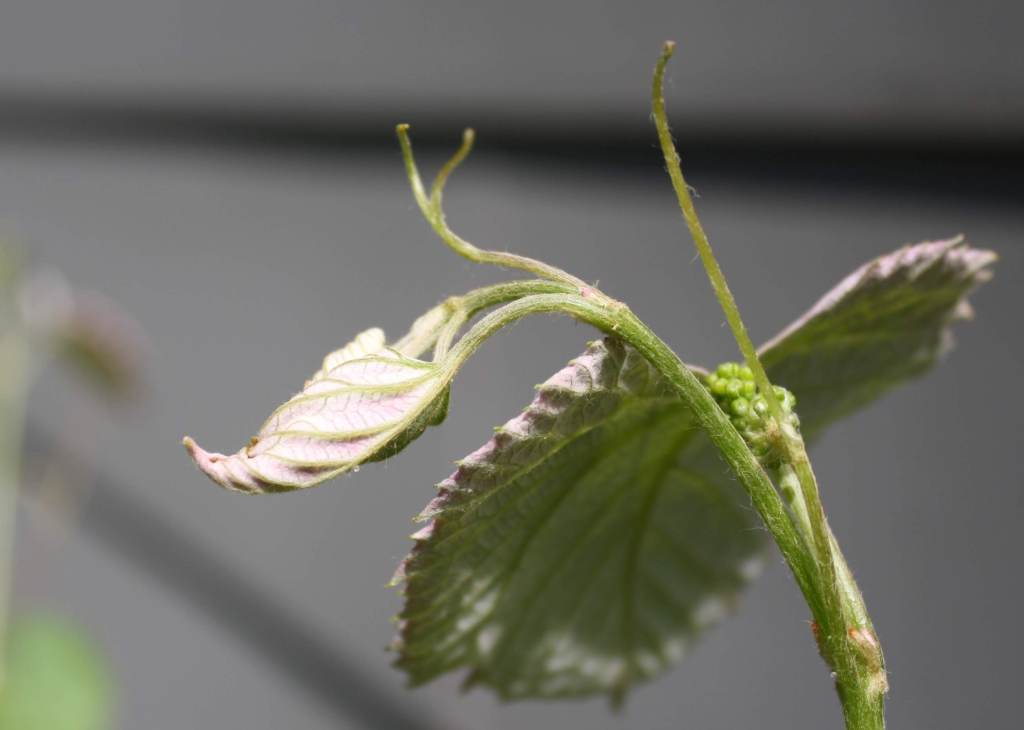
In my early gardening days, something viney sprung up unexpectedly among the rows of potatoes. The plant seemed promising, so I welcomed it. When green-striped fruit began swelling on the vine, I thought I had hit the jackpot and scored a watermelon. But then one day, a more experienced gardener dropped by and took a look. “That’s not a watermelon,” he said. “It’s a pumpkin!” I had failed to see what this curling plant really was.
In my experience, we often fail to see what the church really is. I’m convinced it’s time to reclaim an incarnational vision of the church as a divine and human reality.
Jesus is both divine and human. He entered the world and took on flesh that we might live in friendship with him. God dwelt among us (John 1:14). Declares the Nicene Creed: “For us men and for our salvation, he came down from heaven, and by the Holy Spirit was incarnate of the Holy Spirit.” Jesus is God. Jesus is man. He is both at once. That’s the mystery we call “the incarnation.” Athanasius of Alexandria, the ancient church father who eloquently drew out the meaning of the incarnation, wrote that “the Word of God came himself, in order that he being the image of the Father, the human being ‘in the image’ might be recreated” (On the Incarnation, ch.13).
As Jesus led in the incarnation, so the church follows. The church is both divine and human. It’s gathered by God and infused with the Holy Spirit and centered in Christ. The church is “the body of Christ,” growing toward God while also becoming more truly human (Ephesians 4:12).
Sometimes, we forget the divine aspect of the church. Because families make up the church and the New Testament calls the church the “household of God,” it’s easy for us to imagine that the family is the center of the church (Ephesians 2:19). As a friend of mine once quipped, the family tree is our ecclesiology—our theology of the nature and purpose of the church. On that view, our Sunday gatherings are mainly a family reunion.
But focusing on the family can obscure the fundamental way Christian faith reconfigures human relationships. “Whoever does the will of my Father in heaven is my brother and sister and mother,” said Jesus (Matthew 12:50). Natural family ties have their place, but they’re not the center of the church. It doesn’t matter if you’re related to half the congregation. What counts is how you relate to Jesus. The only blood that matters is His.
Recentering our vision of the church in the divine reality of the body of Christ also reminds us that worship is not only something that we experience or fashion from our own creative ingenuity, but a gift that we offer to God in response to God’s grace toward us. Worship is a “sacrifice of praise” that we bring to God and offer through Jesus the “great high priest” (Hebrews 13:15; 4:14). God cares how we worship him, as Leviticus’s presence in the Bible permanently reminds us. This means we need to come to worship with deep reverence for—and even a holy fear of—God. The question we need to ask ourselves is: Does our worship reflect the reverence we owe God and the transcendence we experience in the Spirit? Do our words and actions and song lift high the name of Jesus and center us in him?
Reclaiming the incarnational vision of the church also means becoming more human in our worship. Jesus shows us what it looks like to live a completely human life. He’s the perfect image of God and of humanity (Ephesians 4:15). As we worship Jesus and conform our lives to his teaching and example, we grow up into his image. The gospel is humanizing. We realize that our bodies are not our own and that all human life bears a precious dignity (1 Corinthians 6:20). We can begin to live this truth out in gathered worship by recovering the embodied practices we see in the Scriptures, like standing in reverence for the word of God, kneeling for confession, laying on of hands in prayer, and anointing for healing (Nehemiah 8:5-6; Psalm 95:6; Mark 16:18; James 5:14).
Above all, an incarnational vision of the church will mean foregrounding the sacraments of baptism and the Lord’s Supper. In baptism with water, Jesus promises to be with us always (Matthew 28:20). Through the bread and cup of communion, Jesus continues his abiding presence. “Those who eat my flesh and drink my blood abide in me, and I in them” (John 6:56). Baptism and communion are therefore more than “just symbols.” Jesus gave the sacraments to us and continues to give himself through them. In baptism and communion, we “do things that do things,” as Andrew Wilson puts it in his book Spirit and Sacrament (p.15).
Living an incarnational vision of the church will mean that when we go out from worship, we live in a community that is growing up into Christ. We will meet in small groups and confess our sins to one another (Hebrews 10:25; James 5:16). We will eat together in each others’ homes “with glad and sincere hearts” (Acts 2:46).
This vision of the incarnational church gathered in worship and scattered in life together happens to be just precisely what we see in the early church in Jerusalem. In Acts 2:42, Luke tells us that the church is devoted “to the apostles’ teaching and fellowship, to the breaking of bread and the prayers.” In other words, they hear and study the gospel, they conform their lives to God’s word, they celebrate communion each time they gather for worship, and they pray throughout the day, just like the people of Israel originally did in the temple (Exodus 29:38-39; Psalm 119:164; Psalm 141:2).
That’s the church I’m longing for—one that’s worshiping in embodied ways and growing together into the body of Christ.
We have to do something different. The old ways no longer work, and we must return to ways older still. It’s time to reclaim an incarnational vision of the church.

 The Doxology Project
Leave a comment