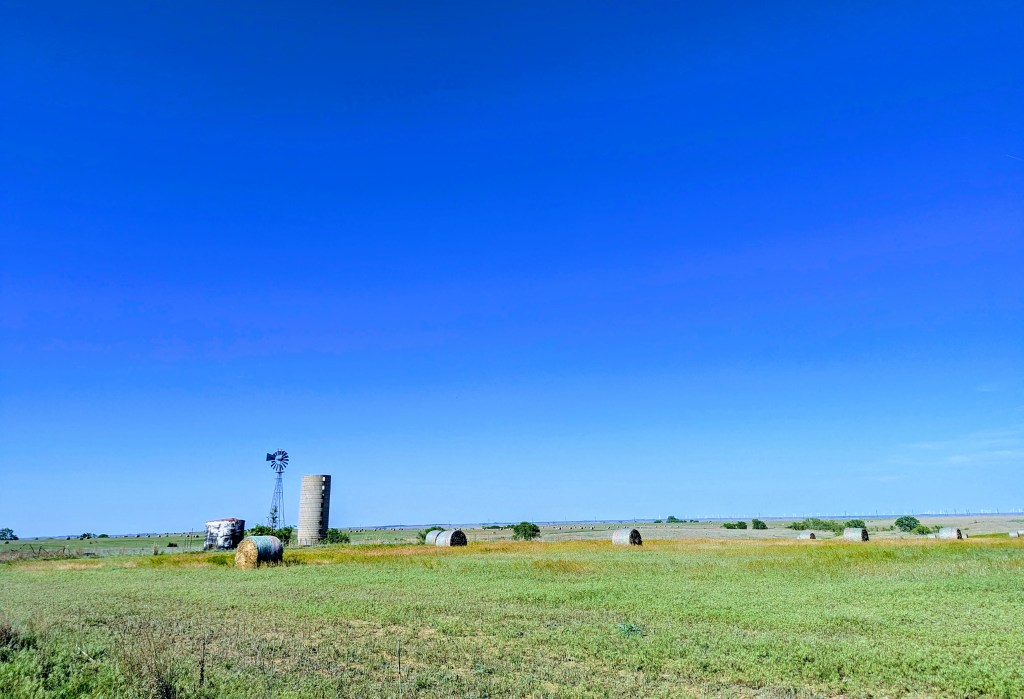
When I was completing seminary, the vibes were urban. Urban was gritty and real. That was where the cutting edge action was, and all the coolest pastors were going to the city. The City. Some kind of city where the parks were a language mélange and there were Korean-Latin-fusion taco trucks backed up around the block. In my (Mennonite) network, with a historically rural base, rural was for the normies.
Yet, my first calling to ministry was rural. Rural was where I learned the ropes, made dumb mistakes, and experienced the thrill of seeing Jesus show up in people’s lives. I got my start in ministry in a rural congregation.
That’s long been the case for many pastors: cut your ministry teeth in rural and then move on to larger suburban and urban congregations. Some pastors take a gotta-do-your-time approach, seeing their rural congregations as a pathway to bigger and better placements. Even when pastors sense an affinity for rural (and some 24% do), they may feel that they have to justify themselves. A seasoned rural pastor once confided that when she spoke of her deep rural assignment, a colleague responded “Who did you piss off?”
I’m convinced that rural is a great place to learn how to be a pastor. I interviewed three pastors whose first call to ministry was rural and discovered three gifts that rural congregations can give pastors in their first calling.
- Space to learn. Dr. Heather Kilbourne, Senior Director of the Faith in Rural Communities program at the North Carolina Rural Center, grew up in a small town, went to seminary in Atlanta and anticipated continuing in a suburban or urban setting. When her United Methodist bishop sent her to a two-point charge in an unincorporated area of rural North Carolina, she initially took it as “a tough call.” “I would not have chosen to go there,” says Kilbourne. “The bishop chose it for me.” And yet, it turned out to be a perfect place to learn how to do ministry. Those rural congregations loved and supported her. They “sat through some really bad sermons and taught me how to do hospital visits and funerals.” That small, rural setting gave her space to grow in every aspect of the life of the church—youth ministry, senior ministry, community development. What’s more, Kilbourne discovered leadership opportunities outside the walls of church, serving as the president of various local boards. The rural church gave her the gift of space to learn. Says Kilbourne: “It was a great way to begin my ministry and get so much experience.”
- Community. Emily Toews, a Mennonite pastor in Washington State, began her ministry in the blink-and-you-miss-it rural town of Drake, Saskatchewan on the plains of western Canada. Hers was the only church in a town of 250 people, located about 1.5 hours from the regional cities of Saskatoon to the west and Regina to the south. Toews, a self-described “adventurer” who loves people, set off for Drake as a newbie single pastor. In a town of that size where she came with no previous connections, Toews quickly learned that she would have to rethink her approach to community if she wanted to have friends and not succumb to loneliness. Toews says she had to “shift my way of being” and “let go of the notion that you have to keep yourself apart.” This led to her perform funerals for people who were not part of her church. “By the end, everybody claimed me as their pastor.” The town gave Toews the gift of community, adopting her as part of the family. They celebrated with her when she married and then again when she had her son. Toews says that to thrive as a rural pastor, “you have to make your home in the community.” If you don’t come and live among them, life on life, “no one’s going to believe that the grace of God is for them.”
- Care. Dr. William B. Randolph, Executive Director of Boomerstock and a United Methodist pastor, began his ministry in rural Stokes County, North Carolina. Early on, Randolph discovered his congregation’s heart to care for their pastor. He was young and single, new to the area and finding his footing in ministry. His congregations welcomed him in, feeding him at their tables and patiently schooling him in the weekly rhythms of NASCAR races. The depth of their care for him hit home one evening when Randolph set out in his small sailboat. His skills were limited and the wind was strong, and he capsized the boat on an isolated corner of the lake. Randolph sloshed to shore and began tromping through the woods, working his way back home. When he didn’t show up for his scheduled shift peeling potatoes for Brunswick stew—a dish slowcooked in a community kettle in many areas across the South—a manhunt was launched. The sheriff tracked him down, and the parsonage yard filled up with worried parishioners. With help from members of his church, he was later able to fish his boat from the water—and finish his shift at the Brunswick stew kettle. Randolph says he has never found any other church that “that knew how to minister to the minister the way the rural churches did.” They gave him the gift of care.
As I spoke to pastors who got their start in rural, I was convinced that we could flip the old narrative on its head. It’s not just Start Rural and Move on. We can reimagine the role of the rural church, with rural congregations intentionally embracing their role as ministry incubators. Network leaders and seminaries can better equip emerging leaders to flourish in—and maybe even develop an enduring love for—rural’s unique contours.
It’s all one more gift the rural church continues to give to the broader church.
This post originally appeared on the Town Square Collaborative Substack.
Learn more about the work of the Town Square Collaborative.


Leave a Reply