Here’s me circa 1993: bucking hay bales on the Illinois prairie, squinting into the horizon and feeling with every rumble of the huffing tractor that if I was going to be someone and do something, I needed to get somewhere else. As fellow Illinois native Ernest Hemingway wrote in his high school plans a century earlier: “I intend to travel and to write.” Me too. But to my own surprise, after a run in Latin America and the east coast of the US, I ended up living and ministering in rural communities.
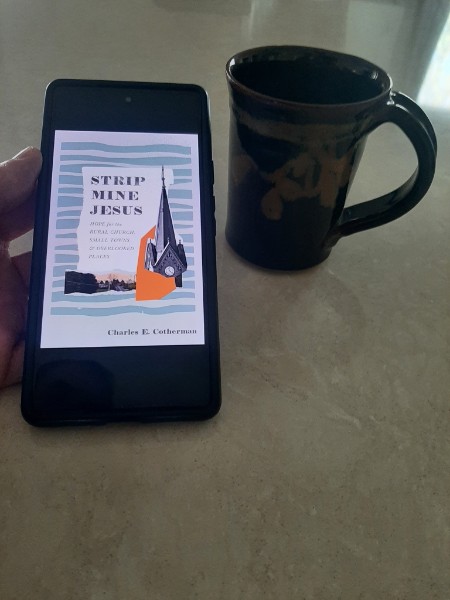
In Strip Mine Jesus: Hope for the Rural Church, Small Towns, and Overlooked Places, Charlie Cotherman writes to people like my younger self. He wants to challenge the cultural narrative that to grow is to go. Weaving his own journey with extensive quotes from great evangelical writers, Cotherman calls leaders to be in place, pay attention to place, and love place.
“Place matters,” Cotherman observes early on. “Contrary to many of the prevailing narratives in American culture, this isn’t a problem to be overcome but a part of God’s design to embrace.” (p.22). Every place is storied, a somewhere in a world tilted toward the mash of our digital and cultural everywhere. We have to learn to be present to the place where we are.
It’s then that we will begin to notice the distinctive features of that place. Cotherman calls leaders to lift their heads up from their screens and see the world around them. His invitation to see is one precious few of us consistently heed. Landscapes all too easily become bland source materials to stripmine for our projects. Cotherman calls us to flip the script and pay attention: what are the beauties and complications and zanies of this particular place?
Paying attention also means noticing the people around us and believing that God has providentially brought them into our lives—and us into theirs. “Could it be that God’s grace has gone before us in more relational ways? What if God has already provided us with a beautiful community right where we are?” (p.94).
Truly noticing a place leads to loving it. We’ll begin to see as God does, the One who loves all places that he has made. “The God who loves the world enough to give himself to save it is still calling people to every corner of it” (p.12). This love for place animates ministry, especially in small and overlooked places.
Cotherman wrote this book with his undergrad students in mind, and to that end he brings in a lot of foundational writers. He quotes at length from the classical evangelical canon: Lewis, Tolkien, Chesterton, Keller. Strip Mine Jesus has an anthological feel and can serve as a resource for leaders just beginning to think through the issues. Readers farther along may gravitate toward Cotherman’s unique insights and story.
It’s in tracing Cotherman’s story that Strip Mine Jesus shines. Cotherman has a compelling journey—growing up in a reclaimed strip mine, becoming a hometown basketball star, chasing intentional community, earning a doctorate, returning home to plant a congregation that is still going strong a decade on.
Through his leadership at the Center for Rural Ministry, Cotherman has his thumb on the pulse of rural and small town congregations. Strip Mine Jesus follows a publishing trend toward expanding the focus from rural to small. While this obviously broadens the book’s appeal, rural and small each pose their own unique challenges. Those seeking particular insights for rural ministry will benefit from following the footnotes to the wealth of resources Cotherman has assembled.
Strip Mine Jesus is a call to the incarnational life. Writes Cotherman: “Whether we like it or not—whether we admit it or not—we are here because God has said he wanted us here” (p.158). Because of the Incarnation, place can become a grace. We meet God in the times and places of our lives. Where else? These words animate the whole book: “If God could be encountered in an abandoned strip mine, surely he could be encountered just as truly and joyfully in other places people had left for dead” (p.23).
In our anxious and fractured age, that’s good news and a worthy starting point for congregational leadership everywhere.


Leave a Reply